A Qatar work visa starts with a Qatari employer. Foreign nationals need the employer to sponsor the file.
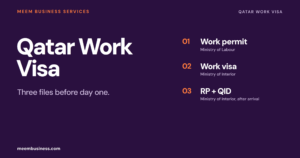
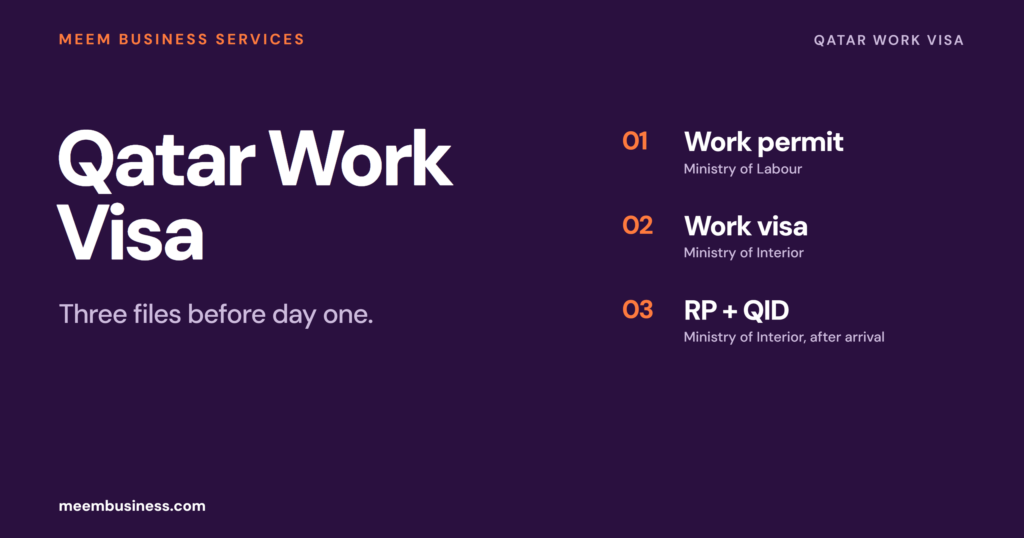
The employer files a work permit through the Ministry of Labour. A work approval and visa then go through the Ministry of Interior. The employee finishes the residence permit and QID after arrival.
Hukoomi lists QR300 (QAR 300) for the work approval and says final approval takes three days. The visa-to-residence conversion typically takes 2-4 weeks, sometimes longer. The Qatar visa guide maps the other entry routes.
The employee cannot file this alone. The file is the employer’s, and the employee’s documents and attendance keep it moving.
Five Checks That Decide the Work Visa File
- Three files, in order: work permit (MOL), work approval and visa (MOI), then RP/QID (MOI).
- Hukoomi lists QR300 for the work approval. The work permit and the RP are separate fees.
- Final work approval takes three days. The RP/QID conversion usually takes 2-4 weeks.
- Do not resign or book travel until the employer confirms the visa is issued.
- The RP conversion is not a holiday window: Hukoomi says the applicant may not leave Qatar during it.
Where are you in the file?
Pick the stage and get the next check, not a generic answer.
Choose your stage.
What a Qatar Work Visa Is
A work visa is the entry permission tied to a Qatari employer. The work visa is not a job-search visa, a visit visa or a freelance pass. The employer sponsors the file because the permission belongs to the role and the company.
The visa is the middle of the chain. Before it comes the work permit. After it comes the residence permit, which is the QID. Treating those as one document is how people miss a step.
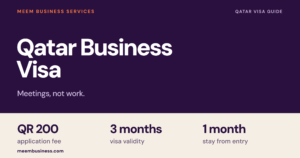
For readers still choosing a route, the Qatar visa guide separates work, business, family and visit entry. A business visitor should use the business visa, not a work visa.
Work Permit, Work Visa and QID: What Comes First
A Qatar work visa follows three separate records. The first is the MOL work permit, then the MOI work approval and visa, then the RP/QID after arrival. Each record has a different owner and a different failure point.
| File | Who runs it | What it produces | Where it stalls |
|---|---|---|---|
| Work permit | Employer through MOL | Approval to employ the role | Expired establishment card, no quota, role and activity mismatch |
| Work approval and visa | Employer through MOI | Visa number and entry visa | No prior approval, passport or profession details that do not match |
| RP and QID | Employer through MOI; employee attends | Residence permit and QID after medical and fingerprints | Missed medical or fingerprint step, travel during conversion |
The work permit is not the visa. The visa is not the QID. A change in one normally means a check on the other two.
Who Files the Work Permit and Visa?
The employer files the work permit and the work approval. The employee provides documents and attends the medical, fingerprint and QID steps.
The employer controls
- Commercial registration and establishment card
- Work permit quota for the role
- Signed contract and MOL submission
- MOI work approval and visa file
- RP filing and Qatar Post delivery
The employee controls
- Passport and personal details
- Photos and certificate copies
- Medical appointment attendance
- Fingerprint and biometric attendance
- Keeping the visa, RP and QID details aligned
The ownership split explains most delays. The employer controls the first two files. The employee controls attendance and the accuracy of personal documents. A mismatch between the two sides can stop a file that looks complete on paper.
What the Employer Must Check Before Filing
The permit rests on the company, not the candidate. A valid commercial registration and establishment card come before the application. The quota must cover the role, and the role must match the licensed activity.
The signed contract then has to agree with the passport, the profession and the quota. Small differences in a job title can turn into a rework.
The employer-side workflow is covered in the work permit guide, including quota, contract and MOL submission.
- Commercial registration and establishment card valid.
- Work permit quota available for the role.
- Job title aligned with the licensed activity.
- Contract details aligned with the passport and the application.
What the Employee Must Provide
The employee provides a clear passport copy, recent photos and the signed contract. Experience letters or educational and professional certificates are added when the role requires them. The employer builds the file, but the employee supplies the evidence.
Some certificates need attestation before the employer can use them. The requirement depends on the document, the role and the nationality. Ask the employer which certificates are needed before paying for legalisation.
- Passport copy with the exact name on the contract.
- Recent personal photos in the requested format.
- Signed offer or employment contract.
- Experience letter or educational and professional certificate when the role requires one.
- Medical tests and fingerprint appointments after arrival.
- A copy of every receipt and appointment slip.
What the Work Visa Costs
The QR300 figure is the work approval step, not the whole onboarding cost. The work permit and the residence permit are separate files with separate fees.
| Step | What the fee covers | Listed fee |
|---|---|---|
| Work permit (MOL) | The employer's permit for the role | Separate MOL fee; confirm in the employer file |
| Work approval (MOI) | The approval that produces the work visa | QR300 (QAR 300) |
| RP and QID (MOI) | The residence permit after arrival | Separate MOI fee; the RP type affects it |
Do not budget one fee for all three stages. Ask the employer which fees it pays and which, if any, are deducted from the package. Get that in writing before you accept.
Be careful with anyone who asks for a visa payment before an employer confirms the permit and the approval. A work visa is filed by the employer, not sold as a standalone product.
How Long Does a Qatar Work Visa Take?
Hukoomi says the approval or visa number can be generated immediately once the prior approval exists. Final approval takes three days. The residence conversion is the slower part: typically 2-4 weeks, sometimes longer.
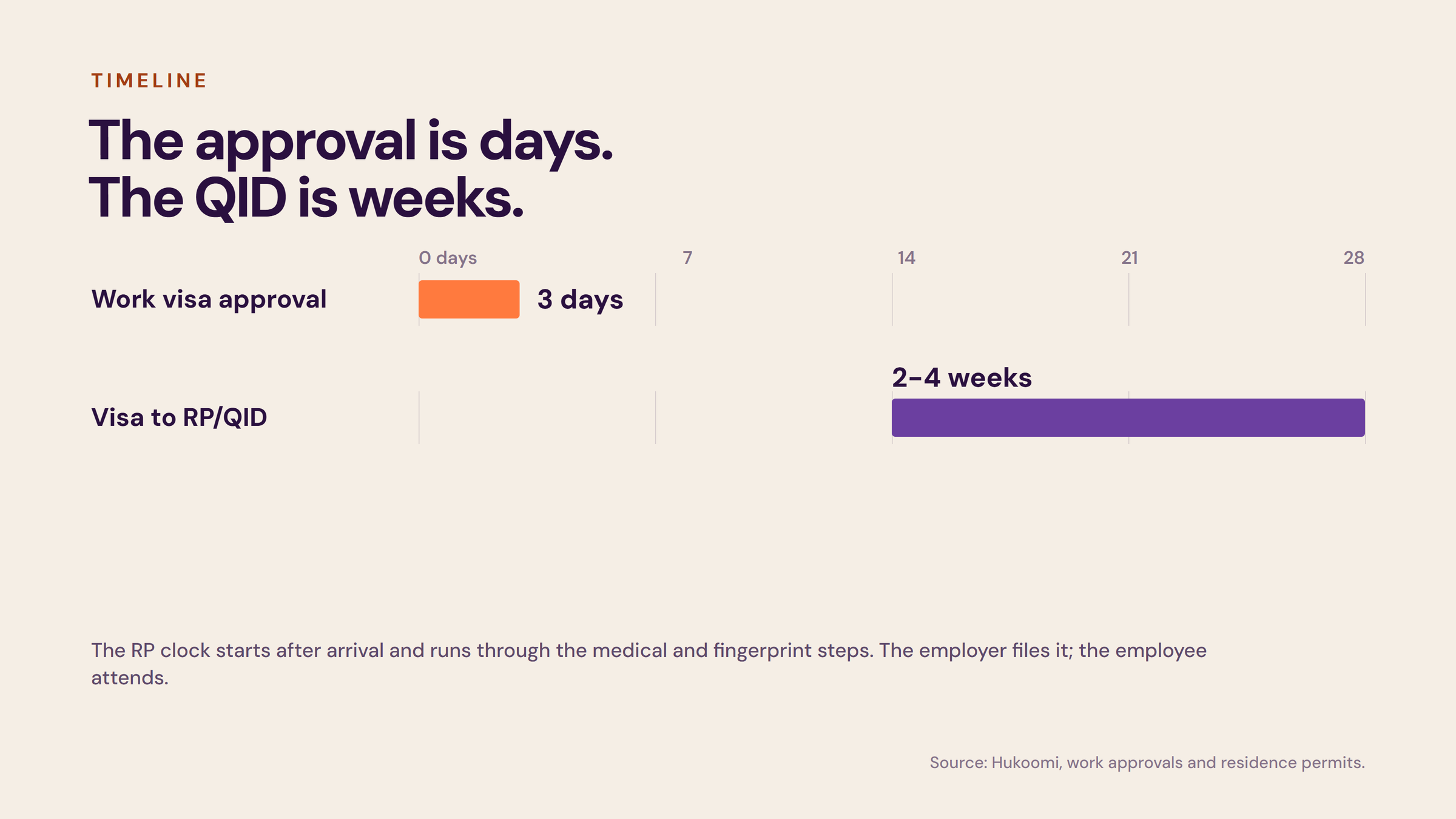
The 2-4 weeks is not a promise. The clock starts after arrival and runs through the medical and fingerprint steps. Hukoomi also says the applicant may not leave Qatar during the visa-to-permit conversion.
Do not book the flight because a start date is in the contract. Wait for the employer to confirm the visa is issued.
After Arrival: Medical, Fingerprints and the QID
The RP application uses the visa number. The employee completes the medical examination and fingerprint steps, then MOI issues the residence permit. The QID is the physical residence card that follows.
Keep the appointment slips and the delivery record. The employer may receive the RP through Qatar Post for a company application. The employee should confirm how the card will be handed over.
The QID is the handoff to normal life: housing, banking, family sponsorship and WPS registration. A visa without the QID is not the end of the file.
QID Renewal, Job Change and Family Sponsorship
The RP is renewed annually by the employer. Record the renewal date as soon as the QID arrives, not when the card is about to expire.
Changing employers is a new file, not a message to the old one. The sponsor-change file may require a no-objection certificate from the current employer.
The new employer needs the permit route and the sponsor change. Do not start work for a new employer on the old visa and assume the transfer is automatic. The sponsor change guide covers that route.
Family sponsorship comes after the RP. The resident sponsors immediate family, subject to salary and document rules. The Qatar family visa guide covers the family file.
Regulated Roles and Nationality Checks
Some Qatar roles need a professional licence before the employer can finish the work visa file. Healthcare and engineering are common examples. The visa does not replace the licence, and the licence does not replace the visa.
Nationality can change the document legalisation and the mission steps. The three-file structure stays the same. Treat a social-media post about an age limit or a fixed fee for one nationality with caution. Check the employer's quota, the role and the current official page.
For a regulated role, ask the employer which licence comes first and who pays for it. That answer belongs in the offer conversation, not at the airport.
Why Work Visa Files Stall
Qatar work visa files usually stall on a role or quota mismatch, an expired establishment card or a name mismatch. Travel before the visa is issued is another common stall. The missing form is rarely the cause.
- The job title in the contract does not match the role or the licensed activity.
- The establishment card expired before the permit was filed.
- The quota does not cover the role or the nationality mix.
- The passport name, profession or date of birth differs across documents.
- The employer files the visa before the prior approval is in place.
- The employee books travel before the visa is issued.
- The medical or fingerprint appointment is missed.
- The employee leaves Qatar during the RP conversion.
In practice, the expensive delays are usually role and quota mismatches, not a missing photograph. Role and quota mismatches are fixed before the application, not after a rejection.
Work Visa Checks Before You Accept the Offer
Before accepting a Qatar job offer, confirm the employer has the establishment card, quota and work permit reference. Confirm the visa route before you resign or book travel.
- The employer confirms the commercial registration, establishment card and quota.
- The job title in the offer matches the role to be filed.
- The employer gives you a work permit application reference.
- The work approval and visa number are confirmed before travel.
- The passport details match the contract exactly.
- Certificates and attestation are clear for the role.
- The medical and fingerprint steps are planned for after arrival.
- The RP, QID and WPS steps have an owner.
- The renewal date is recorded once the QID is issued.
When the employer cannot explain the difference between the work permit, the work approval and the RP, pause. That is not a paperwork detail; it is the file.
Need the Employer File Checked Before the Offer?
A work visa is only as clean as the employer file behind it. The company needs the registration, the establishment card, the quota and the role to line up. That check happens before the permit is filed.
Meem handles work permits, company formation and PRO follow-up for companies it has onboarded. Meem does not issue the visa; MOL and MOI do. A company that is not set up yet starts with company formation in Qatar.
What to Check on the Work Visa Before You Fly
Confirm that the employer has the permit, the work approval and the visa number, not just a start date. Check the name, passport number, profession and employer on the visa before you travel.
Keep the medical and fingerprint appointments. Do not leave Qatar during the conversion unless the employer confirms it is safe. When the QID arrives, check the renewal date and the WPS registration.
The work visa is a chain. The QID is the handover to normal employment, not a bonus at the end.
Qatar Work Visa FAQ
A Qatar work visa is employer-sponsored and needs a work permit, MOI approval and RP/QID.
What is a Qatar work visa?
A work visa is the entry permission tied to a Qatari employer. The employer sponsors the file, and the employee later completes the residence permit and QID.
Is a work visa the same as a work permit?
No. The work permit is the MOL approval to employ the role. The work approval and visa are the MOI steps that let the employee enter. The RP and QID come after arrival.
Can I apply for a Qatar work visa myself?
Not on this route. The employer applies because the permission belongs to the company and the role. The employee supplies personal documents and attends the medical and fingerprint steps.
How much does a Qatar work visa cost?
Hukoomi lists QR300 (QAR 300) for the work approval step. The work permit and the RP are separate fees. Agree with the employer which fees it pays before you accept the offer.
How long does a Qatar work visa take?
Hukoomi says the processing time for final work approval is three days. The visa-to-RP conversion typically takes 2-4 weeks, sometimes longer. The RP clock starts after arrival.
What documents do I need?
A clear passport copy, recent photos, the signed contract, and educational or professional certificates when the role requires them. Medical and fingerprint steps happen after arrival.
When do I get the QID?
After arrival, through the RP application, once the medical and fingerprint steps are complete. The employer files the RP; the employee attends the appointments.
Can I change jobs on a work visa?
A new employer needs the permit and sponsor-change route. Do not start work for a new employer on the old visa and assume the transfer is automatic.
Can I bring my family?
Family sponsorship comes after the RP. The resident sponsors immediate family, subject to salary and document rules. The family visa guide covers that file.
Can I leave Qatar during the RP conversion?
Hukoomi says the applicant may not leave Qatar during the visa-to-permit conversion. Confirm with the employer before booking any travel.
Sources
Checked 27 October 2026. The employer and the current MOL and MOI pages remain the final check before submission.

Head of Operations at Meem
4+ years of Qatar PRO experience across ministries and authorities, including establishment licensing and approvals.
Connect On LinkedIn →