
The Department of Healthcare Professions under the Ministry of Public Health has officially expanded Qatar’s healthcare licensing framework through Circular No. DHP/2025/23.
This circular introduces three new Allied Health Practitioner scopes into the national licensing system: Cardiovascular Technologist (Non-Invasive), Osteopath Practitioner, and Infection Prevention and Control Practitioner.
Effective from 17 December 2025, the update applies to all licensed healthcare professionals and healthcare facilities operating across government, semi-government, and private sectors in Qatar.
If you are planning to work in Qatar under one of these roles, or you are responsible for hiring and licensing healthcare staff, understanding this circular is essential for compliance.
Key Takeaways
- DHP Circular DHP/2025/23 officially adds three new Allied Health scopes to Qatar’s national licensing framework.
- The newly approved scopes are Cardiovascular Technologist (Non-Invasive), Osteopath Practitioner, and Infection Prevention and Control Practitioner.
- The circular is effective from 17 December 2025 and applies to government, semi-government, and private healthcare facilities.
- All three roles have defined education requirements, approved scopes of practice, and competency validation criteria.
- Overseas applicants must have a minimum of two years of relevant professional experience for licensing eligibility.
- Passing the DHP licensing examination may be required unless an exemption applies under existing DHP policies.
- Applicants with a break from practice must comply with the official DHP Break from Practice policy.
- Credential verification, including education and experience checks, is mandatory for all applicants.
- Meem Business Services supports healthcare professionals with eligibility assessment, DataFlow verification, and end-to-end DHP licensing support.
What Does DHP Circular No. DHP/2025/23 Announce?
The circular was issued following approval by the Permanent Licensing Committee (Meeting No. 16 of 2025).
Its purpose is to formally regulate emerging and specialized Allied Health roles by defining who can practice, where they can practice, and under what licensing conditions.
Each newly added scope now has mandatory requirements covering education, scope of practice, experience, and competency validation.
Practicing under these titles without meeting DHP requirements is not permitted.
To understand the new updated rules for Qatar healthcare licensing, including exam exemptions, internship, and experience requirements, read our New Qatar Healthcare Licensing Update 2026 guide.
Cardiovascular Technologist (Non-Invasive)
Role Overview
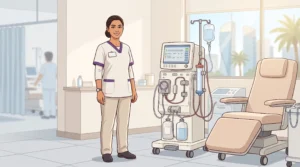
A Cardiovascular Technologist (Non-Invasive) is a healthcare professional trained to perform diagnostic procedures that assess cardiac and vascular function using non-invasive technologies.
Education Requirements
Applicants must hold:
- A bachelor’s degree in cardiovascular technology, cardiac science, or a related healthcare field
or - An associate degree in cardiovascular technology with a minimum duration of two years
Scope of Practice
The approved scope includes:
- Echocardiography, ECGs, cardiac stress testing, Holter and event monitoring
- Vascular ultrasound studies such as carotid duplex scans
- Patient preparation, explanation of procedures, and informed consent
- Operation and maintenance of non-invasive diagnostic equipment
- Clinical reporting and collaboration with physicians
- Accurate documentation of procedures and findings
Experience and Licensing
Overseas candidates must have at least two years of relevant experience and hold a valid professional license from their home country.
Passing the DHP licensing examination may be required unless an exemption applies under existing DHP policies. All qualifications are subject to verification.
Osteopath Practitioner
Role Overview
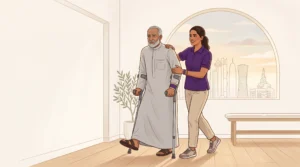
An Osteopath Practitioner is a licensed healthcare professional practicing non-invasive manual therapy focused on the musculoskeletal system and its impact on overall health.
Osteopathy is regulated in Qatar as a complementary healthcare discipline.
Recognised Education Pathways
Accepted qualifications include:
- Doctor of Osteopathy
- Master’s degree in Osteopathy
- Bachelor of Musculoskeletal Health with a postgraduate diploma in Osteopathy
- Bachelor’s degree in Health Science followed by a master’s in Osteopathy
- Approved postgraduate or specialist osteopathy qualifications
Scope of Practice
Licensed Osteopaths may perform:
- Manual diagnostic and therapeutic techniques including cranial, myofascial, visceral, and neuromuscular therapies
- Muscle energy techniques and direct or indirect manipulation methods
- Ordering laboratory tests and imaging such as X-rays for diagnostic purposes
- Therapeutic exercises, electrotherapy, and hydrotherapy
- Dietary and supplement advice limited to MoPH-approved products
- Sports injury management, including elite athletes
Experience and Licensing
A minimum of two years of professional experience is required. Graduates of accredited osteopathy programs in Qatar may be exempt from the experience requirement after completing internship.
DHP examination and credential verification apply where applicable.
Infection Prevention and Control Practitioner
Role Overview
An Infection Prevention and Control Practitioner is responsible for developing, implementing, monitoring, and evaluating infection prevention policies and practices across healthcare settings.
Education Requirements
Applicants must meet one of the following pathways as defined by DHP:
Pathway One
- Bachelor’s degree in a healthcare-related field such as nursing, medicine, public health, epidemiology, or microbiology
and - A postgraduate qualification of at least one year in infection prevention and control, public health, epidemiology, or healthcare management
Pathway Two
- Bachelor’s degree in a healthcare-related field
and - An internationally recognised IPC certification such as CIC, CPIC, or an equivalent qualification
Scope of Practice
The approved scope includes:
- Implementation and auditing of IPC programs
- Surveillance of healthcare-associated infections
- Outbreak investigation and reporting
- Development and enforcement of IPC policies
- Antimicrobial stewardship advisory
- Training and education of healthcare staff
- Contribution to patient safety and healthcare quality initiatives
Experience and Licensing
Overseas candidates must have a minimum of two years of IPC experience and hold a valid professional license or registration.
The DHP licensing examination may apply unless an exemption is granted under existing policies.
Important Notes for All Applicants
- The circular is effective from 17 December 2025
- Applicants with a break from practice must comply with the official DHP Break from Practice Policy
- Credential verification and competency validation are mandatory
- Official DHP contact email: dhpregistration@moph.gov.qa
Frequently Asked Questions
Need Support With DHP Licensing in Qatar?
Understanding the circular is only one part of the process. Licensing delays often occur due to eligibility misalignment, documentation errors, or verification issues.
Meem Business Services supports healthcare professionals and facilities with structured, compliant licensing assistance, including eligibility assessment, DataFlow coordination, Quadrabay verification, and full DHP application management.
You can review our dedicated Medical Licensing Services in Qatar here.