
The fastest ways to grow your business in Qatar in 2026 include investing in yourself and your team, building strong local partnerships, doubling down on customer experience, leveraging your social media presence, studying your competitors, and making data-driven decisions.
These strategies combine real-world execution with digital marketing business growth and operational improvements tailored to Qatar’s market.
The conditions for rapid business expansion in Qatar have never been stronger. With 97% of CEOs expecting domestic economic growth this year, we are already seeing a spike in new business registrations across incredibly diverse sectors
10 Proven Ways to Grow Your Business Quickly in Qatar
- Qatar in 2026 offers a high-growth business environment driven by economic expansion and non-oil sector investment.
- Invest in skills and team development to improve performance and long-term growth.
- Hire the right people with local market knowledge and strong execution ability.
- Focus on customer experience to increase trust, retention, and repeat business.
- Use social media as a primary channel for visibility, engagement, and lead generation.
- Build strategic partnerships to access markets faster and strengthen credibility.
- Network consistently to create business opportunities and valuable relationships.
- Study competitors to identify market gaps and improve your positioning.
- Diversify revenue streams to improve stability and support scaling.
- Make data-driven decisions to optimize marketing, sales, and operations.
- Ensure legal compliance and a strong business foundation to protect growth.
Qatar Business Growth Strategy Prioritizer
Answer 4 quick questions to get your personalized top 3 growth strategies
Why Is 2026 the Right Time to Grow Your Business in Qatar?

Qatar’s economy is entering a growth phase that business owners can’t afford to ignore. GDP growth is forecast at 4.8% in 2026, driven by the North Field East LNG expansion and aggressive diversification into non-hydrocarbon sectors.
The government has committed an additional $2 billion to startup investment, launched a 10-year residency programme for entrepreneurs, and partnered with Brookfield on a $20 billion AI infrastructure project.
Non-oil sectors now account for over 65% of Qatar’s total GDP, and they grew 5.3% in Q1 2025 alone. The Ministry of Commerce and Industry’s 2024–2030 strategy targets 3.4% annual growth in these sectors specifically.
As Bassam Hajhamad, PwC Qatar Country Senior Partner, put it: “CEOs in Qatar are entering the next phase of growth with exceptional confidence, clarity of direction, and long-term purpos.”
If you’ve been thinking about scaling, the macro environment is working in your favor.
Here are the specific ways to grow your business quickly in Qatar right now.
1. Invest in Yourself and Your Employees
The fastest way to grow a business is to grow the people running it. Skills gaps are a major bottleneck for scaling companies in Qatar, and closing them pays off faster than almost any other investment.
Here’s what this looks like in practice:
- For business owners: Take courses in financial management, digital marketing, or leadership. Qatar Foundation and HEC Paris in Doha both offer executive education programmes tailored to the Gulf market.
- For employees: Fund certifications, language training (Arabic proficiency opens doors), and cross-functional skill development.
- Create a learning culture: Allocate a specific training budget per employee per year. Even QAR 2,000–5,000 per person annually can make a measurable difference in retention and productivity.
According to PwC’s 2026 CEO Survey, 84% of Qatar CEOs report having clearly defined AI roadmaps, and 81% cite strong organizational culture supporting AI adoption.
If the biggest companies in Qatar are investing this heavily in upskilling, smaller businesses that don’t will fall behind.
Common mistake: Treating training as a cost rather than an investment. Track the ROI by measuring employee output and customer satisfaction before and after training initiatives.
2. Hire the Right People to Scale Faster
Growth stalls when the wrong people are in key roles. In Qatar’s competitive labor market, hiring well means being intentional about both skills and cultural fit.
What “right people” means for Qatar-based businesses:
- Bilingual candidates (Arabic + English) are worth the premium, especially in client-facing roles.
- Local market knowledge matters more than impressive CVs from abroad. Someone who understands Qatari business etiquette and government processes will outperform a technically stronger candidate who doesn’t.
- Hire for attitude, train for skill in junior roles. Qatar’s labor market moves fast, and adaptable employees grow with the business.
Decision rule: If a role directly generates revenue (sales, business development, key account management), invest 20–30% more in salary to get a top performer. The difference in output between an average and excellent salesperson can be 3–5x.
3. Focus on Customer Experience as a Growth Engine
In Qatar, relationships drive revenue. Businesses that deliver exceptional customer experience grow through referrals and repeat purchases, which cost a fraction of acquiring new customers.
Practical steps to improve customer experience:
- Respond fast: Aim for under 1 hours on WhatsApp and social media inquiries.
- Personalize interactions: Use CRM software (even free tools like HubSpot CRM) to track customer preferences and purchase history.
- Ask for feedback systematically: Send a short survey after every major transaction. Act on the results visibly.
- Offer Arabic-language support: Even if your primary market is expats, having Arabic customer service signals professionalism and respect.
Quick example: A Doha-based home services company that implemented a simple post-service WhatsApp follow-up saw repeat bookings increase by 35% within three months. The cost? Zero, beyond the time to send a message.
4. Build a Strong Social Media Presence
Social media is a key driver of digital marketing business growth, especially in a highly connected market like Qatar. With internet penetration above 99% and heavy usage of Instagram, TikTok, Snapchat, and X (Twitter), your customers are already scrolling.
The question is whether they’re seeing your brand.
Here’s a focused social media strategy for Qatar:
| Platform | Best For | Content Type | Posting Frequency |
|---|---|---|---|
| B2C, lifestyle, food, retail | Reels, Stories, carousels | 4–5x per week | |
| B2B, professional services | Articles, case studies, company updates | 3–4x per week | |
| TikTok | Younger demographics, brand awareness | Short-form video, behind-the-scenes | 3–5x per week |
| Snapchat | Local promotions, events | Stories, geofilters | 2–3x per week |
| X (Twitter) | News, thought leadership | Threads, commentary, industry updates | Daily |
Key tactics:
- Use Arabic and English in your content. Bilingual posts consistently outperform English-only content in Qatar.
- Collaborate with local micro-influencers (5,000–50,000 followers). They often deliver better engagement rates than mega-influencers and cost significantly less.
- Run geo-targeted ads focused on Doha, Lusail, and Al Wakrah for local businesses.
If you’re exploring how to start an online business in Qatar, social media isn’t optional. It’s your primary storefront.
5. Expand Through Strategic Local Partnerships
Partnerships are one of the fastest ways to grow your business quickly in Qatar because they give you instant access to established customer bases and local credibility.
Types of partnerships that work in Qatar:
- Distribution partnerships: Partner with a company that already serves your target market but doesn’t compete directly. A cleaning supplies company partnering with a facilities management firm, for example.
- Co-marketing agreements: Share marketing costs and audiences with complementary businesses.
- Government-linked partnerships: Qatar’s government actively supports public-private collaboration, especially in sectors aligned with National Vision 2030.
- Joint ventures: For larger opportunities, a JV with a local Qatari partner can open doors to government contracts and institutional clients.
Choose partnerships if: You need market access faster than you can build it organically, and your potential partner has complementary (not competing) strengths.
Avoid partnerships if: The terms are vague, there’s no clear exit mechanism, or the partner’s reputation doesn’t meet your standards.
6. Attend Networking Events and Industry Conferences
Face-to-face connections still close deals in Qatar. The business culture here values personal relationships, and networking events are where those relationships start.
Key events and opportunities in 2026:
- Web Summit Qatar: Doubled to 30,000 attendees in 2026, bringing together innovators, investors, and government officials. Check out the key announcements from Web Summit 2026 for context on what’s driving investment.
- Qatar Chamber of Commerce events: Regular sector-specific meetups and trade delegations.
- Startup Qatar ecosystem events: Particularly relevant for tech and innovation businesses.
- Industry-specific trade shows: Qatar hosts conferences in healthcare, construction, energy, and finance throughout the year.
Networking tips that work in Qatar:
- Exchange business cards (still important here, unlike many Western markets).
- Follow up within 24 hours via WhatsApp or LinkedIn.
- Offer value first. Ask “How can I help?” before pitching.
- Attend consistently. Showing up once doesn’t build relationships; showing up regularly does.
7. Research Your Competitors Thoroughly
You can’t outgrow competitors you don’t understand. Competitor research in Qatar is especially valuable because many businesses underinvest in it, meaning the insights are there for those willing to look.
A practical competitor research framework:
- Identify your top 5 competitors (both direct and indirect).
- Audit their online presence: Website quality, social media engagement, Google reviews, app store ratings.
- Mystery shop them: Experience their customer journey firsthand. Note what they do well and where they fall short.
- Analyze their pricing: Are they competing on price or value? Where’s the gap?
- Track their hiring: Job postings reveal where competitors are investing and expanding.
Common mistake: Copying competitors instead of differentiating from them. Use research to find gaps, not to replicate what already exists.
For a data-driven look at where opportunities exist, try the Qatar Market Opportunity Analyzer tool.
8. Diversify Your Revenue Streams
Businesses with multiple revenue streams grow faster and survive downturns better. This is especially relevant in Qatar, where sector-specific fluctuations (construction cycles, energy price swings) can impact single-revenue businesses hard.
Ways to diversify in Qatar’s market:
- Add a digital product or service: If you run a consulting firm, create an online course or downloadable toolkit. The Qatar ecommerce market is growing rapidly and offers new channels for existing businesses.
- Offer subscription or retainer models: Convert one-time customers into recurring revenue.
- Expand geographically within Qatar: If you’re only serving Doha, consider Lusail, Al Khor, or Al Wakrah.
- License your expertise: Train other businesses or franchise your model.
- Add complementary services: A photography business adding videography, or a restaurant adding catering.
This approach supports sustainable business growth by reducing reliance on a single revenue stream.
Decision rule: A good diversification move shares at least 50% of your existing infrastructure, skills, or customer base. If it requires building everything from scratch, it’s not diversification; it’s a new business.
9. Measure, Analyze, and Optimize Everything
What gets measured gets improved. The difference between businesses that grow steadily and those that plateau is almost always data discipline.
Key metrics every Qatar-based business should track:
- Customer Acquisition Cost (CAC): How much does it cost to win one new customer?
- Customer Lifetime Value (CLV): How much revenue does an average customer generate over their entire relationship with you?
- Monthly Recurring Revenue (MRR): For subscription or retainer-based businesses.
- Net Promoter Score (NPS): How likely are customers to recommend you?
- Employee productivity metrics: Revenue per employee, output per team.
- Cash conversion cycle: How quickly does money move from expense to revenue?
Tools that work well for SMEs in Qatar:
- Google Analytics 4 (free) for website traffic
- Meta Business Suite (free) for social media analytics
- Zoho or HubSpot CRM (free tiers available) for sales tracking
- QuickBooks or Xero for financial reporting
Edge case: If your business is pre-revenue or very early stage, focus on leading indicators (website traffic, inquiry volume, conversion rates) rather than lagging indicators (revenue, profit).
10. Get Your Legal and Administrative Foundation Right
Growth built on a shaky legal foundation collapses. This might not be the most exciting strategy, but it’s among the most important ways to grow your business quickly in Qatar without hitting avoidable roadblocks.
What “getting the foundation right” means:
- Correct company structure: LLC, branch office, or free zone entity, each has different implications for growth. See the legal requirements for business setup in Qatar for a detailed breakdown.
- Up-to-date licenses and permits: Expired or incorrect licenses can result in fines and operational shutdowns.
- Proper employment contracts: Non-compliant contracts create liability as you scale.
- Tax and financial compliance: Qatar’s tax environment is favorable, but compliance requirements still exist.
- PRO services: Government paperwork, visa processing, and document attestation consume time that business owners should spend on growth.
This is where Meem Business Services adds direct value. From company formation to PRO services, Meem handles the administrative and compliance work so business owners can focus on the strategies that actually drive revenue.
Qatar Business Growth: Which Strategy Fits Your Market
Qatar in 2026 offers a rare combination: a government actively investing billions in economic diversification, record-high business confidence, and a growing consumer market hungry for quality products and services.
The 10 ways to grow your business quickly in Qatar outlined above aren’t theoretical. They’re practical steps that work in this specific market, at this specific time.
Here’s what to do next:
- Pick 2–3 strategies from this list that align with your current stage and resources.
- Set measurable goals for each (e.g., “Increase repeat customer rate by 20% in 6 months”).
- Execute consistently for at least 90 days before evaluating results.
- Get your administrative house in order so compliance issues don’t slow you down.
Contact Meem Business Services if you need help with company formation, PRO services, or business consulting in Qatar.
FAQ on Business Growth Strategies
u003cstrongu003eQ: What is the fastest way to grow a business in Qatar in 2026?u003c/strongu003e
A: The fastest way depends on your business stage, but strategic partnerships with established local companies and doubling down on customer experience consistently produce the quickest results in Qatar’s relationship-driven market.
u003cstrongu003eQ: How much does it cost to set up a company in Qatar?u003c/strongu003e
A: Costs vary by structure. An LLC can range from QAR 15,000 to QAR 50,000+ depending on the activity and capital requirements. Use Meem’s u003ca href=u0022https://meembusiness.com/company-opening-cost-calculator/u0022u003ecompany opening cost calculatoru003c/au003e for a personalized estimate.
u003cstrongu003eQ: Can foreign business owners have 100% ownership in Qatar?u003c/strongu003e
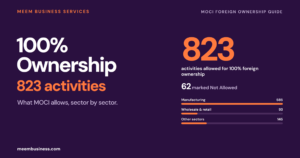
A: Yes, Qatar allows 100% foreign ownership in most sectors since recent regulatory changes. However, certain activities still require a local partner. Check the u003ca href=u0022https://meembusiness.com/100-ownership-in-qatar-investor-rules/u0022u003elatest rules on 100% ownershipu003c/au003e for specifics.
u003cstrongu003eQ: Which sectors are growing fastest in Qatar?u003c/strongu003e
A: Non-oil sectors including tourism, real estate, logistics, services, FinTech, and AgriTech are seeing the strongest growth, supported by the 2026 budget’s emphasis on economic diversification.
u003cstrongu003eQ: Is social media marketing effective for B2B businesses in Qatar?u003c/strongu003e
A: Yes, particularly LinkedIn. Qatar’s business community is highly active on LinkedIn, and B2B companies that post consistently (3–4 times per week) with Arabic and English content see strong engagement.
u003cstrongu003eQ: What networking events should business owners attend in Qatar?u003c/strongu003e
A: Web Summit Qatar (30,000 attendees in 2026), Qatar Chamber of Commerce events, and sector-specific trade shows are the highest-value options.
u003cstrongu003eQ: How important is Arabic language for doing business in Qatar?u003c/strongu003e
A: Very important. While English is widely spoken in business, Arabic-language marketing materials, customer service, and social media content significantly improve trust and conversion rates with Qatari and Arab expat customers.
u003cstrongu003eQ: What are PRO services and do I need them?u003c/strongu003e
A: PRO (Public Relations Officer) services handle government paperwork, visa processing, license renewals, and document attestation. Most growing businesses in Qatar benefit from outsourcing these tasks to save time and avoid compliance errors.
u003cstrongu003eQ: How do I find reliable business partners in Qatar?u003c/strongu003e
A: Attend networking events, join the Qatar Chamber of Commerce, use LinkedIn to connect with industry leaders, and consider working with a business consulting firm that has local connections.
u003cstrongu003eQ: What’s the biggest mistake businesses make when trying to grow in Qatar?u003c/strongu003e
A: Ignoring the legal and administrative foundation. Businesses that scale without proper licensing, contracts, and compliance structures often face costly penalties and operational disruptions that erase their growth gains.

Head of Operations at Meem
4+ years of hands-on Qatar PRO experience, handling approvals and government procedures across multiple ministries and authorities, including establishment licensing and approvals.
Connect On LinkedIn →